If you’ve had a pulse the past 5 years or so and on occasion, read a business article in the paper or a magazine, you’ve no-doubt read about some company being disruptive. “Disruptive business models,” “disruptive products,” “disruptive companies,” “disruptive people” and all other things disruptive are the name of today’s game. There once was a time when all this disruption would not be thought of too kindly, but times have changed.
Steve Jobs and Apple disrupted traditional phones with the first iPhone nearly 10 years ago, a configurable device that worked not only as a phone but had many characteristics of a personal computer, personal assistant and more. Uber is likewise disrupting traditional taxi services without owning any autos or employing any drivers. Tesla is disrupting the automotive market by doing things with electric cars the traditional automotive companies claim not possible, and selling them directly to customers. Amazon disrupted traditional mass brick-and-mortar retailers with an internet-based retail and distribution operation that is fast becoming a global store. Not to be outdone, NASA intentionally disrupted its traditional design-build-operate missile program with a focus on missions while outsourcing the hardware to accomplish them. The list of disruptors goes on.
When analyzing the pattern in each of the disruptions we read about, there seem to have been rules that were assumed to be the only way to do things, like:
- New cars are sold only through franchise dealers
- Taxi driver unions are required to protect equally the drivers and the public safety
- The only way to reach Mars is to have a single organization develop the products, processes and people to get there and back
What about fabricators and manufacturers? Traditionally a steady-as-she-goes industry where stability earns business and repeat business, consider: has the time come where disruption is what’s next? Do we have some unwritten rules we assume will always be the drivers of how we operate?
- Scale drives down the cost of manufacture
- Custom products are manufactured best by small-scale manufacturers
- Custom products are more costly to produce than standard products
Will these “rules” hold true 25 years from now? 10 years from now? 5? The simple fact is, there are disruptors trying to break these rules today. Why do you think we read so much about automation, flexible tooling, 3D printing/additive manufacturing, nanotechnology, Internet-of-Things, cobotics, and more? Simple. They are the seeds of disruption in manufacturing.
The Disruptive Imperative
For all the buzzworthiness of the term “disruption,” the fact is that the competitive pressure to innovate and shake up established markets is too powerful for companies of any and all sizes – and the people who lead them – to disregard. And that’s having ramifications in the day-to-day experiences of most workplaces. Most of us are familiar with the ad for Babson College’s MBA program back in 2011 – because it was recited widely throughout the business world – “some 40% of Fortune 500 companies in 2000 no longer existed by 2010.” That rate of extinction hasn’t let up. Leaders have to be ready to challenge everything they’ve held dear – to seek out disruption opportunities – and seize them any way appropriate.
Today’s most effective leaders know the “prevent defense” – avoiding possible big losses by taking few chances – might be the safe bet but it’s no longer the sure bet. The sure bet today is to become an effective disruptive leader, and to help your organization thrive on identifying, creating and capitalizing on disruptive opportunities. Let’s talk about what makes a disruptive leader.
5 Drivers of Disruptive Leaders
- Relentlessly Pursue the Truth
Not telling others what you can see with your own eyes is the first step towards an early grave. When the business environment shifts and everyone sees it, the last thing a company needs is a leader who suggests everyone keep calm and carry on.
Disruptive leaders empathize with their teams and involve them in their thinking.
Disruptive leaders are always testing to make sure their companies’ strategies are effective – and say so when they aren’t. The more rapidly change takes place, the more crucial it becomes for leaders to take all their employees with them on the journey. Trust them. Be honest with them. The truth hurts sometimes, but ignoring the new truth often leads to far worse pain. Discussing the “new truth” inspires people to share ideas more openly, try things more quickly, and adopt new ways of doing things they might not have contemplated otherwise.
- Guide Others through Chaos

Leaders need to be comfortable with the reality that in the face of change, the future is often hazy. And they need their employees, suppliers, partners and customers to be equally comfortable with ambiguity. As a company enters unchartered waters, it can be daunting for everyone involved. This is where the “steady as she goes” approach to leadership has merit. Not to guide an organization along a familiar course during difficult times, but to keep the ship steady as you steer it in a new direction.
Disruptive leaders prioritize open communication and dedicate more time to it than anything else.
Leaders need to cut through the press-release exaggerations about “exciting new opportunities” and explain in concrete, practical terms how the changes underway tie into the company’s plans, what new moves the company is making, and why. Disruptive leaders involve all their people in their thinking. Chaos with a meaningful destination is somehow a little less chaotic, even if you can’t map out every move in advance and share them with your people.
- Decisive

The guiding principle of a disruptive leader is decisiveness. Leading by consensus has its place in the business world, but you can’t focus-group your way to an effective new playbook when the landscape changes constantly. There are times when there’s simply not enough time to highlight every nuance of business shifts before you have to steer in a new direction.
Even if some decisions involve the most basic of “gut feels,” disruptive leaders need to tell their teams precisely what they want, when and why – then help them to make it happen. Waiting too long to weigh counter opinions can spell doom.
- Break the Rules and Explain Why
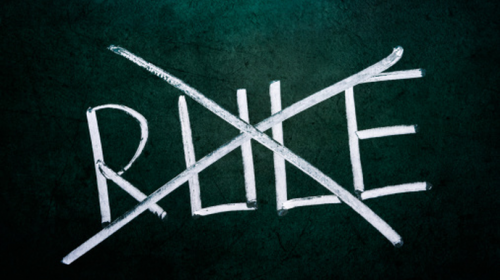
The word “normal” doesn’t exist in a disruptive leader’s vocabulary – once something has become normal, it’s probably obsolete. The market is constantly changing, and the aim is always to be at the front of the change rather than be run over by it. The disruptive leader’s worst nightmare is to be the industry laggard – allowing the competition to be first and trying to time how long to wait before following along.
Disruptive leaders break rules, make new rules and nurture a healthy skepticism of best practices.
Same goes internally. Leaders who thrive on leading change know they can’t be the ones to implement it. They depend on their teams to do that, and do it well. That means employees need to be empowered and they need to know their boundaries. To be an effective team, employees need to know the rules of the game and which ones they can break.
Effective leaders know that embracing disruption means there’s always a “new normal.” They thrive on identifying what new normal is, and helping their teams reach it first. That means unleashing the constraints on employees, allowing them to reach new normal as a team ahead of anyone else.
- Thrive on Learning

Leading disruptive innovation means getting used to incredible levels of uncertainty. You never know how something will work until you try it. You build a team that thrives on trying new things. Sharing what works and what doesn’t. Admitting mistakes openly. Learning together.
Disruptive leaders develop learning organizations.
Learning organizations are pliable, not shaken by change or plans that don’t work out exactly right the first time. Disruptive leaders dedicate immense time to communication – repeating what the team is trying, why they’re trying it, what happens when it works and what happens if it doesn’t. While communications drive disruptive leaders, they don’t steal the limelight. They thrive when members of their teams talk up. Challenge each other. Share what they’re doing. Celebrate wins. Share what they learned along the way.
People attracted to learning organizations know they don’t have a crystal ball. They know there’s a method to the madness that comes with navigating continuous change. Navigating unchartered water. They enjoy the mayhem of rough waves. Unpredictable weather.
People attracted to learning organizations know it doesn’t matter if the organization doesn’t get it right the first time. They don’t get queasy with uncertainty. They don’t look for today to be just as smooth as yesterday. They enjoy the journey.
Leading the Manufacturing Disruption
Manufacturing may be facing some headwinds, but it’s undeniably in the midst of a technological renaissance that is transforming the look, systems, and processes of the modern factory. I’ll repeat a few I mentioned at the outset – automation, 3D printing/additive manufacturing, nanotechnology, Internet-of-Things, cobotics, and more – the seeds of manufacturing disruption are being sewn around us.
Despite the risks – and despite recent history – manufacturing companies cannot afford to ignore these seeds. By embracing them now, you can lead manufacturing disruption to improve productivity in your own plant, compete stronger against rivals, and maintain an edge with customers who are seeking their own gains from innovation.
Manufacturing leaders should be asking these critical questions: At a time of rapid change and limited upside, which technology investments will have the biggest positive impact on my business? And what is the value potential, return on investment, and risk of investing in these technologies?

Let’s discuss moving your company into the disruption fast lane – contact us today.